Family Blackout Communication Plan
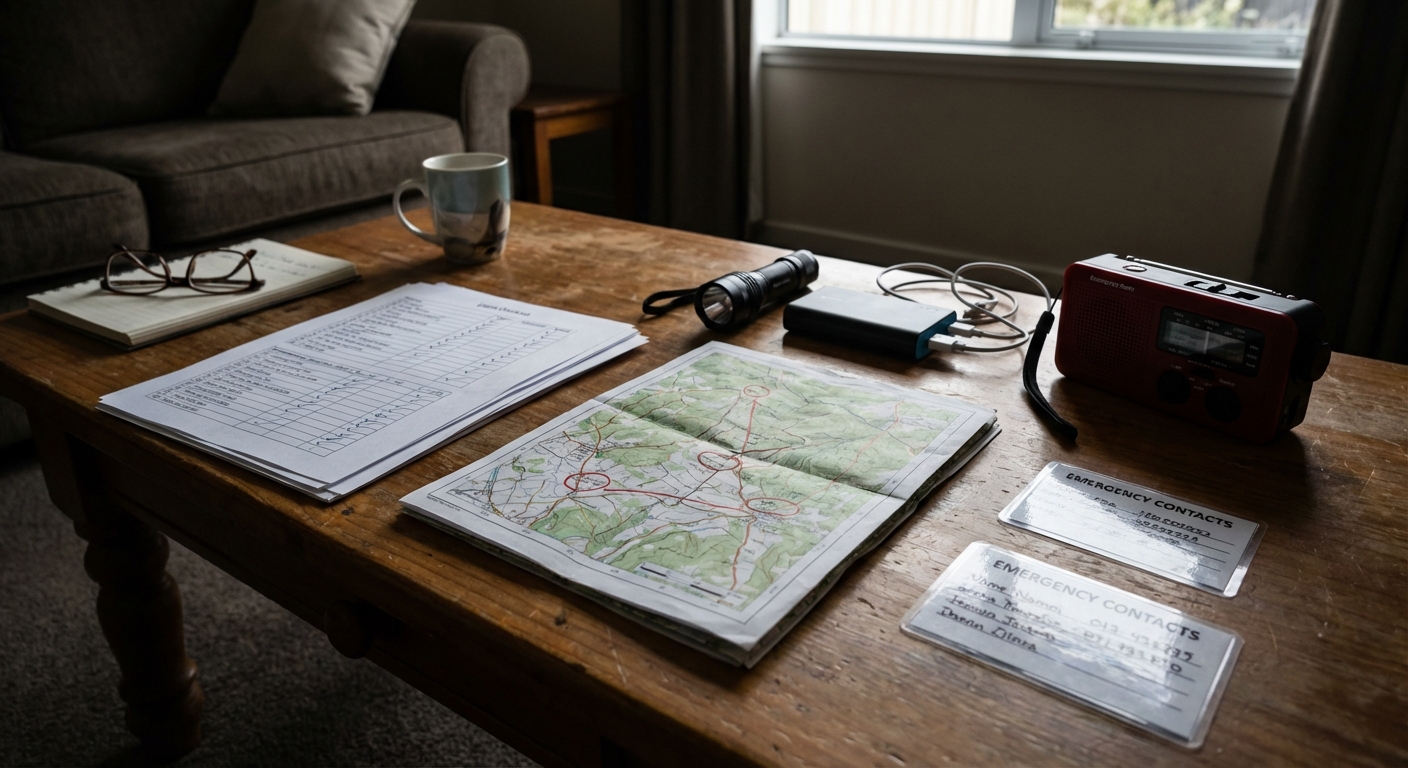
Communication breakdown causes avoidable risk during extended outages. A written household plan keeps everyone aligned when phone service or power becomes unstable.
1) Define Roles and Priorities
- Primary coordinator for check-ins and decisions.
- Backup coordinator if primary contact is unavailable.
- Assigned transport and equipment responsibilities.
2) Set Communication Channels
- Primary channel: cellular text check-ins at fixed times.
- Secondary channel: battery radio updates and pre-set station list.
- Tertiary channel: in-person rendezvous at agreed locations.
3) Publish Physical Checkpoints
Document three locations: near-home, neighborhood fallback, and out-of-area fallback. Print copies for each adult and keep one in each vehicle.
4) Run a Quarterly Drill
Simulate a no-power/no-wifi evening every quarter. Time your workflow and capture bottlenecks in writing.
Planning principle: a short, clear plan that gets practiced is better than a complex plan that never gets tested.
Sources
- Ready.gov family communication planning framework (accessed March 9, 2026).
- FEMA emergency communication guidance (accessed March 9, 2026).